PLYN CONTENT · 8/13/2026
🏥 5 Things Foreigners Should Know Before Visiting a Hospital in Korea
Visiting a hospital in a new country can feel unfamiliar, especially if the healthcare system is different from what you're used to. Understanding how Korean hospitals work—including prescriptions, National Health Insurance (NHI), appointments, and emergency services—can help you receive medical care more smoothly. Here are five important things every foreigner should know before visiting a hospital in Korea.
If you're visiting a hospital in Korea for the first time, the healthcare system may be different from what you're familiar with. Knowing a few basic things in advance can make your visit much easier.
1️⃣ Hospitals and Pharmacies Are Separate
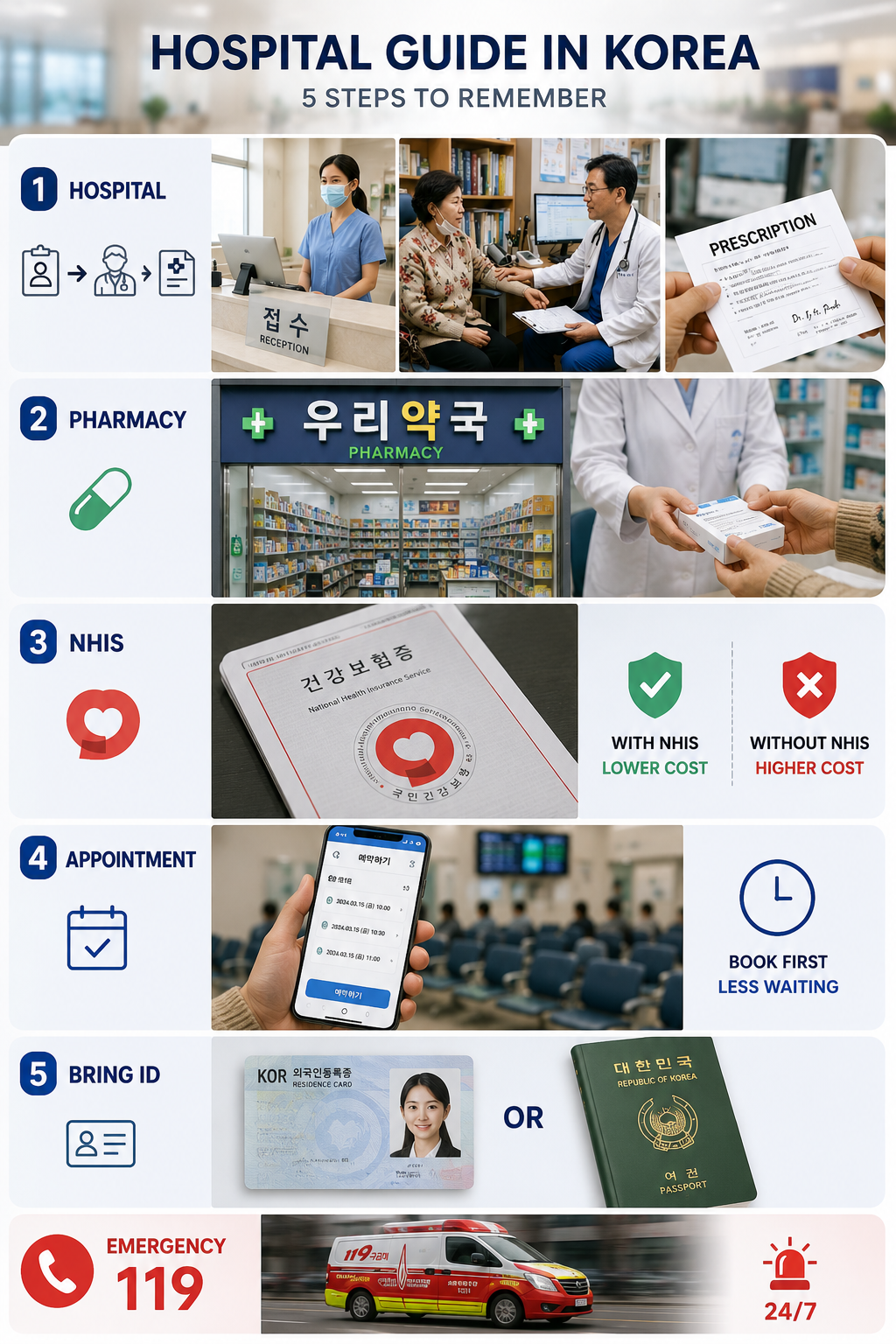
After your consultation, the doctor will usually give you a prescription. In most outpatient cases, hospitals do not provide medication directly. Instead, you'll need to take your prescription to a nearby pharmacy to collect your medicine.
2️⃣ National Health Insurance (NHI) Can Significantly Reduce Medical Costs
If you're enrolled in Korea's National Health Insurance (NHI), a large portion of your medical expenses is usually covered. Without insurance, the cost of the same treatment can be much higher, so it's important to understand your insurance status if you're planning to stay in Korea.
3️⃣ Making an Appointment Can Save You Time
Many clinics and hospitals accept walk-in patients, but making an appointment in advance can reduce your waiting time—especially at larger hospitals. Appointments are often available by phone, through the hospital's website, or via a mobile app.
4️⃣ Bring a Valid ID
Most hospitals require identification during registration. Be sure to bring your passport, Residence Card, or another valid form of identification. Without proper ID, registration or treatment may be delayed.
5️⃣ Call 119 in an Emergency
If you experience a serious injury or a life-threatening emergency, call 119 immediately. Korea's 119 provides ambulance and fire emergency services, and ambulance dispatch is generally free of charge. Keep in mind that emergency rooms are intended for urgent situations and are usually more expensive than regular outpatient clinics.
Understanding these basic procedures before you need medical care can make visiting a hospital in Korea much less stressful. A little preparation goes a long way in helping you access healthcare safely and confidently.